


What Causes Gray Hair
Many people think, “Oh, what does it matter if I go gray?” But premature graying is often a sign that your body may have mineral deficiencies. This is greatly underestimated, even though it can lead to various health issues.
Possible symptoms of mineral deficiencies (especially copper and iron):
- Anemia & low energy: fatigue, paleness, shortness of breath, dizziness, headaches, cold hands and feet, difficulty concentrating, and irritability.
- Hair, nails & skin: brittle nails, hair loss, dry skin, rashes, and delayed wound healing.
- Bones & muscles: bone loss (osteoporosis), increased risk of fractures, muscle cramps, and muscle twitching.
- Nervous system & mental health: tingling in fingers/toes, sleep problems, anxiety, irritability, and migraines.
- Heart & circulation: heart rhythm disorders.
- Digestion: constipation or other intestinal complaints.
- Immune system: more frequent colds or infections, loss of taste and smell.
Why copper and iron are especially important
Copper and iron are crucial for the production and function of many enzymes in our body. Enzymes are proteins that accelerate (catalyze) chemical reactions. They ensure that metabolism, digestion, energy production, and detoxification proceed properly.
When a deficiency in copper or iron occurs, enzyme production is disrupted. This has a domino effect: many other processes slow down or become disrupted. The consequences can include:
- Accumulation of toxins
- Deficiencies in building blocks
- Production of harmful byproducts
A deficiency in just one of these two minerals can therefore disrupt the entire enzyme system. That is why it is unwise to simply dismiss graying as “a normal part of aging.”
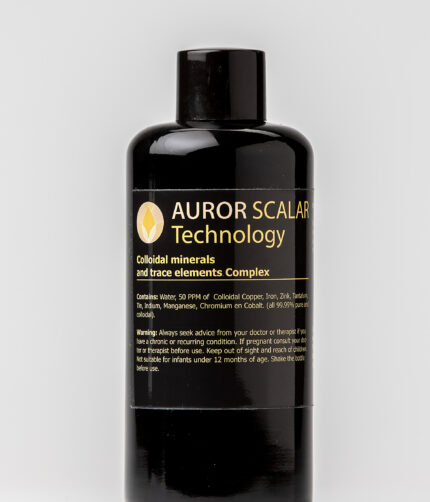
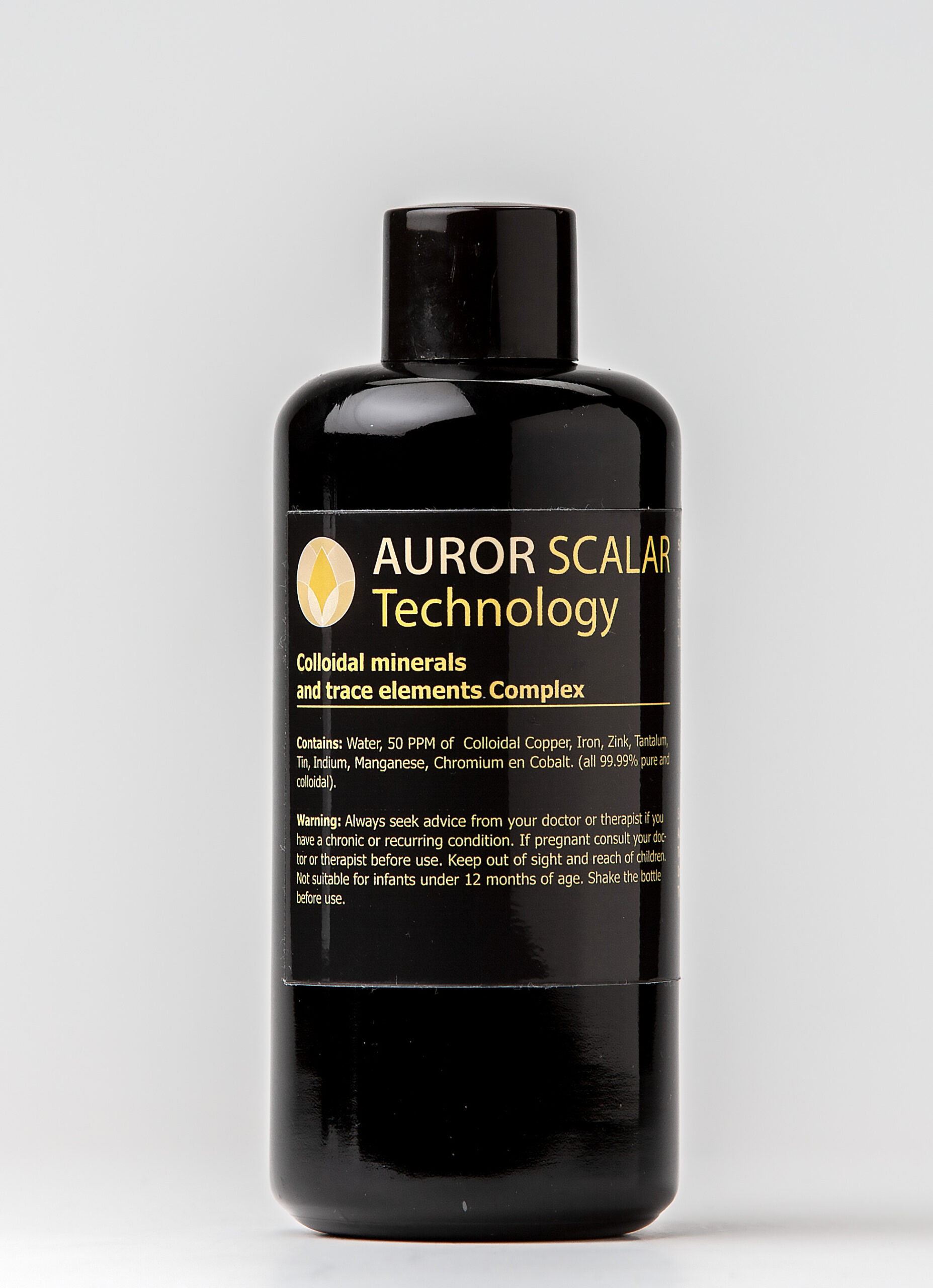
Colloidal minerals and trace elements Complex
€65,00 – €375,00
Contains: Water, 50 PPM Colloidal Copper, Iron, Zinc, Tantalum, Germanium, Tin, Indium, Manganese, Chromium, and Cobalt. (All 99.99% pure and colloidal).
What is a colloidal product
Definition: A colloidal product is a mixture in which small particles (colloids) of a substance are permanently dispersed in a liquid without dissolving. The particles remain suspended by electrostatic repulsion or other stabilizing forces.
- Particle size: Colloidal particles have a diameter between 1 and 1000 nanometers (nm). This makes them larger than molecules, but small enough not to sink to the bottom.
- Examples: Colloidal silver or gold, milk (fat and protein particles in water), mayonnaise (oil in water)
- Properties: Colloids exhibit the Tyndall effect (light scattering, which can make them appear cloudy). They are stable thanks to mechanisms such as the Zeta potential (electrostatic repulsion).In the case of colloidal silver or gold, these are often metal particles (atoms or clusters) in distilled water, with a typical brownish-green (silver) or red (gold) color depending on the concentration.
- Applications: In health products (external use, such as colloidal silver for antibacterial properties), foodstuffs, cosmetics, and industrial applications.